On-Grid Solar Systems
On-grid (grid-tied) solar is connected directly to the WBSEDCL or CESC utility power grid. When your panels generate more electricity than your home or factory is using, the extra units flow through a bi-directional net-meter into the grid for monetary credit.
-
savings
Lowest Capex Investment: No expensive chemical batteries that degrade every 5–7 years, reducing the capital outlay and total cost of ownership.
-
sync_alt
Bi-Directional Net-Metering: Seamless unit-for-unit adjustment against night units consumed from the utility grid. Zero manual switching needed.
-
speed
Fastest Financial ROI: 3.5 to 4.5 year payback for residential rooftops; 3 to 4 years for C&I factory installations.

Off-Grid Solar Systems
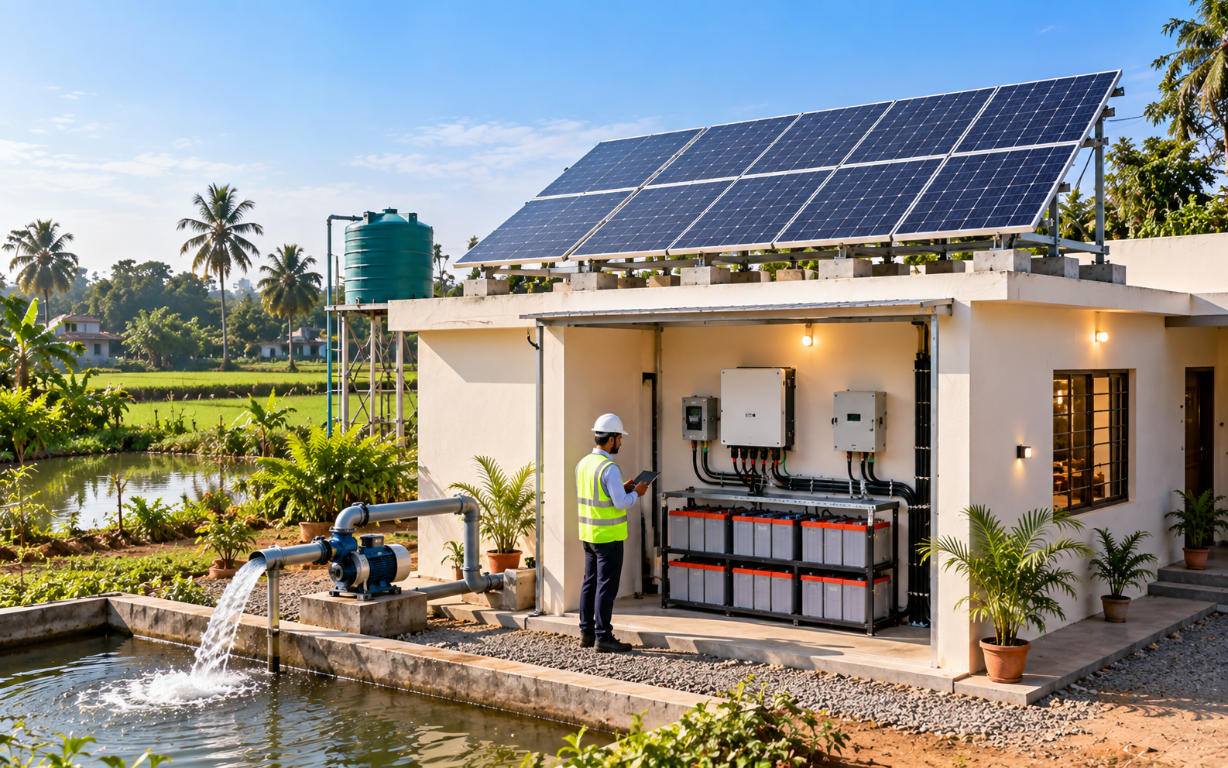
An off-grid solar system works completely independent of the state utility grid. Equipped with heavy-duty solar batteries, it stores solar power during peak daylight hours to power your appliances throughout the night and during prolonged power cuts.
-
power
24/7 Energy Autonomy: Guaranteed electricity even when grid lines are completely down or during extended cyclone transmission blackouts.
-
nature
Ideal for Remote Locations: Farmhouses, resorts, rural agricultural pump sites, or forest fringe zones with unreliable grid connections.
-
storage
Lithium or Tubular Storage: Scalable battery storage engineered for high cycles, depth of discharge (DoD), and rapid recharge rates.
Hybrid Solar Systems
Hybrid systems combine the cost savings of net-metered grid connection with the reliability of battery storage. In case of grid failure, the system automatically disconnects from the grid and powers your critical appliances within milliseconds.
-
offline_bolt
Zero Blackout Disruptions: Instant microsecond changeover protects medical equipment, computers, data servers, and residential ACs seamlessly.
-
hub
Smart Power Routing: Prioritizes direct solar generation -> battery charging -> grid import/export intelligently according to load demands.
-
currency_rupee
Net-Meter Revenue: Sell surplus solar energy to CESC / WBSEDCL after battery reaches 100% state of charge.